



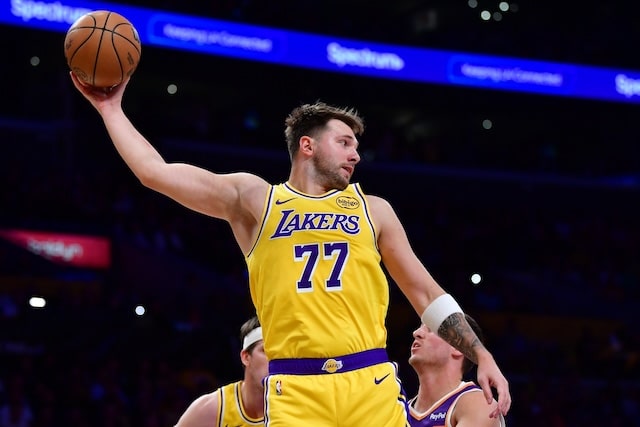
The Los Angeles Lakers enter the heart of the 2025-26 season with a clear identity, a winning record, and a front office that remains aggressive. JJ Redick has installed a faster, more modern system built around Luka Dončić’s all-court playmaking and Deandre Ayton’s presence inside, and early results have validated that vision. The core looks strong, but the Lakers still project as a team that will explore the market for ways to strengthen the rotation and address specific weaknesses rather than overhaul the roster.
That framing matters because expectations in Los Angeles are higher than just securing a playoff berth. LeBron James is still driving high-level offense, Austin Reaves has taken another step as an on-ball creator, and Deandre Ayton has stabilized the center position with efficient scoring and strong rebounding. In a year where fans track every rumor as closely as they follow box scores and online pokies Australia, the front office faces pressure to get each move right and preserve both the present window and future flexibility.
Current Shape of the Roster
The defining change of the last year was the blockbuster trade for Luka Dončić, followed by his long-term extension. The Lakers now lean on Dončić as their primary initiator, trusting his ability to control tempo, create advantages in the half-court, and close games as a three-level scorer. His usage remains high, but Redick has adjusted his spacing and tempo to keep himself fresher late in games and to better leverage shooters and cutters around him.
LeBron’s role has shifted slightly but remains central. He slides between forward spots, toggling between initiator and play-finisher depending on lineups. With Dončić handling much of the early-clock creation, LeBron can pick his spots, attack mismatches, and conserve energy for defensive stretches and closing minutes. The combination has given the Lakers one of the league’s most difficult late-game duos to scheme against.
Ayton’s Impact and Frontcourt Dynamics
Deandre Ayton has delivered the kind of production the Lakers envisioned when they signed him in free agency. He provides reliable scoring on rolls, seals, and post touches while anchoring the glass on both ends. His efficiency as a finisher has boosted the Lakers’ half-court offense, and his defensive rebounding has helped the Team limit second-chance opportunities and ignite transition opportunities. The team still pushes him to be more consistent as a rim protector, but his overall impact has been firmly positive.
Around Ayton, the Lakers mix size and versatility. Maxi Kleber gives Redick a stretch big man who can space to the corners and above the break, opening driving lanes for Doncic and Reaves. Rui Hachimura remains a key frontcourt scorer, hunting midrange spots and mismatches against second units. Jarred Vanderbilt has been moved out of the starting lineup, but his defensive activity and offensive rebounding still provide the coaching staff with a situational weapon against certain matchups.
Backcourt and wings under Redick
JJ Redick has leaned heavily on backcourt balance. Marcus Smart provides point-of-attack defense, toughness, and secondary playmaking, often taking on the most challenging perimeter assignment to lighten the load on Dončić and Reaves. His willingness to do the dirty work, dive on the floor, and organize the defense has helped sharpen the team’s identity in tight games.
Austin Reaves continues to grow as a scoring guard who can run pick-and-roll, get to the line, and make plays for others. Redick’s system places him in more actions with second units, where he can dominate touches, then slides him back alongside Doncic and LeBron in closing lineups. Gabe Vincent remains part of the plans, but his ongoing injury issues have limited continuity in the guard rotation and forced the Lakers to lean more on younger options and creative staggered lineups.
Jake LaRavia and the Development Track
Jake LaRavia has carved out a role as a rotation forward, backing up both wing spots and providing size and shooting. His willingness to take open threes, move the ball, and compete defensively fits exactly what Redick wants from role players around the stars. While still learning the nuances of guarding quicker wings and handling playoff-level physicality, his floor spacing alone gives him a path to meaningful minutes as the season progresses.
The Lakers have also invested in youth with players like Dalton Knecht, Bronny James, and Adou Thiero, as well as two-way depth pieces. These players do not drive current results to the same degree as the stars, but their development matters for long-term flexibility. If even one or two of them pop as reliable rotation pieces, the front office gains more options in shaping future trades without sacrificing core assets.
What the Lakers Still Need
Despite the strong start, a few needs have emerged that could guide the 2025 trade blueprint. The first is an additional two-way size on the wing. When Vanderbilt is not on the floor, the Lakers can be a bit thin in terms of long, switchable defenders who also command respect as shooters. Hachimura and LaRavia help, but an extra high-minute wing who can defend multiple positions and knock down open threes would ease the burden on LeBron in long series.
The second need is insurance in the ball-handling department. The trio of Dončić, Reaves, and Smart covers most playmaking scenarios, yet injuries or foul trouble quickly expose how much the offense relies on them. Vincent’s unavailability so far has underlined this issue. A guard who can comfortably run second units and hold up defensively, even in a more minor role, would stabilize the rotation and reduce the strain on the primary creators.
Trade Strategy and Asset Approach
Given the way Redick’s system has clicked and Ayton’s strong fit, the Lakers are unlikely to pursue a major shakeup at the top of the roster. The more realistic approach centers on marginal upgrades that target specific skill gaps while preserving the core of first-round picks, including Dončić, LeBron, Ayton, Reaves, Smart, and Hachimura. That means hunting for role players on manageable contracts who can slide into defined roles rather than chasing another star.
Expiring deals, young prospects on rookie contracts, and mid-sized salaries give the front office enough tools to be active without overextending. The presence of several developing players also provides optionality; the Lakers can either bet on their internal growth or package one or more of them if an immaculate rotation fit becomes available. With JJ Redick emphasizing continuity and defined roles, any target will need to fit stylistically on both ends.
Outlook Heading Toward the Deadline
All signs indicate that the Lakers will approach the 2025 trade deadline with a measured yet opportunistic mindset. The foundation of Doncic, LeBron, and Ayton has proven good enough to contend, and Redick’s system has given role players clear responsibilities. Instead of gambling on a flashy overhaul, the focus will likely remain on strengthening wing depth, refining ball-handling, and adding playoff-tested defenders where possible.
If the right deal emerges, Los Angeles has the pieces in place to move forward without compromising its identity. If not, the team can still rely on internal improvement, Vincent’s return to health, and continued growth from LaRavia and the younger group. Either way, the blueprint points toward targeted refinement rather than drastic change, with the Lakers betting that stability, star power, and clever mid-season tweaks can keep them in the championship conversation deep into 2026.