



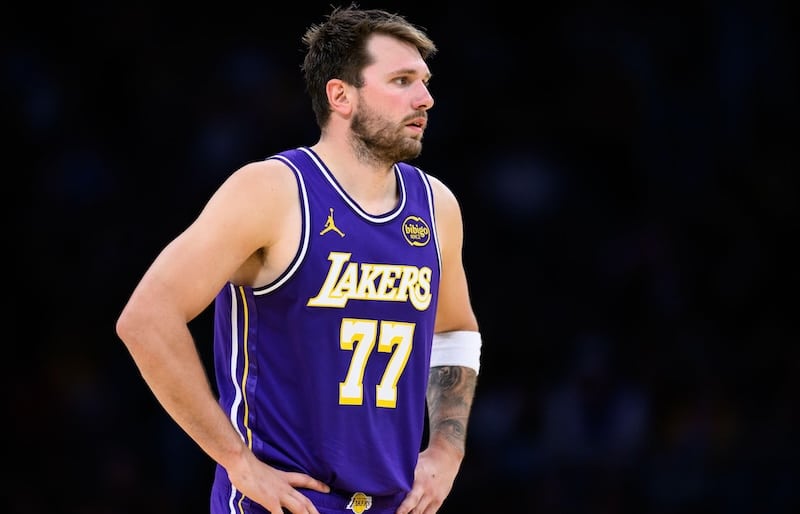
The Los Angeles Lakers will open the 2026–27 season without LeBron James for the first time since 2018–19. James informed the franchise on June 30 that he would play elsewhere, then joined the Philadelphia 76ers in July. The move ends an eight-year Lakers run that included the 2020 NBA championship.
Los Angeles did not answer that change by starting over. The front office built around Luka Dončić and Austin Reaves, then added size, defense, and secondary ball handling around them. JJ Redick now faces his clearest test as Lakers coach: turning a redesigned roster into a team with a repeatable identity.
For readers assessing the Lakers’ outlook before opening night, the key variables are the projected win total, Dončić’s workload, Kessler’s defensive impact, and whether Reaves can thrive in a larger playmaking role. An x1bet sportsbook review can help bettors evaluate available NBA markets, but the strongest Lakers analysis will come from tracking how Redick’s new rotation performs once the regular season begins.
A New Offensive Hierarchy
Dončić becomes the unquestioned center of the Lakers’ offense. He can control pace, force help defenders to commit, and create open shots with one pass. That skill gives Los Angeles a high offensive floor, but it also creates an important challenge. The Lakers cannot ask him to solve every difficult possession.
Reaves is the key to avoiding that trap. He must attack tilted defenses, initiate possessions when Dončić sits, and provide a reliable second option late in games. The Lakers need both guards to create advantages, not merely take turns holding the ball.
Redick can help with the structure. More screening actions, quicker decisions, and purposeful off-ball movement can give Dončić clearer reads. The most effective version of this offense will not rely on isolation alone. It will create a steady stream of corner threes, cuts, and shots at the rim.
The early schedule will offer clues, but November standings should not settle the larger debate. The more useful measure is whether the Lakers generate quality looks when opponents switch, load the paint, or trap Dončić above the arc. A team that keeps the ball moving in those moments can carry its style into April.
Walker Kessler Changes The Interior
The Lakers addressed a major roster need by acquiring Walker Kessler from the Utah Jazz in July. At 7-foot-2, Kessler gives Los Angeles a true rim protector and a lob target for Luka Dončić and Austin Reaves. The Lakers paid a significant price to acquire him, sending unprotected first-round picks in 2031 and 2033, plus first-round swaps in 2028 and 2030, to Utah.
On offense, Kessler can create vertical spacing that the Lakers often lacked at center. Defenses must account for him near the rim when Dončić comes off a screen. That can free shooters on the perimeter, create driving lanes for Reaves, and give Los Angeles a more dependable finishing presence around the basket.
His defensive role may matter even more. Kessler must protect the paint without fouling, finish possessions with rebounds, and stay playable when opponents use smaller, faster lineups. Redick will need to find combinations that preserve Kessler’s rim protection without sacrificing perimeter coverage in closing situations.
The rest of the rotation offers more options than last season’s group. Quentin Grimes and Collin Sexton add ball-handling and scoring depth behind Dončić and Reaves. Sandro Mamukelashvili gives the Lakers another frontcourt option, while Kevon Looney provides veteran depth at center. Matisse Thybulle, Ziaire Williams, Jake LaRavia, and Jarred Vanderbilt offer different defensive and athletic looks on the wing.
That mix gives Redick more flexibility, but it also presents a clear challenge. The Lakers need shooting around Dončić while maintaining enough size and defensive resistance to survive playoff matchups. The second unit does not need to dominate every night. It needs to avoid the long scoring droughts and defensive breakdowns that can erase a strong start from the first group.
How To Judge Progress
A championship remains the ultimate standard for the Lakers, but the first benchmark for 2026–27 should be more specific. By midseason, Los Angeles should know its best eight-man rotation, its preferred closing lineup, and the defensive coverage it trusts against elite guards and wings.
Health will shape that process. Continuity matters for a team with new personnel and a new hierarchy. The Lakers need Dončić and Reaves to build chemistry with Kessler, and Redick needs enough practice time to establish habits that hold up under pressure.
Closing-game decisions will reveal the team’s growth. Who takes the toughest perimeter assignment? Does Reaves receive early touches when defenses focus on Dončić? Can Kessler remain on the floor against faster opponents? Those are not minor tactical questions. They will determine whether Los Angeles has a playoff-ready foundation.
The Lakers are not rebuilding in the traditional sense. Dončić is a franchise-level talent, Reaves is an established complementary creator, and Kessler fills a clear positional need. Still, this is not a simple continuation of the James era. Los Angeles must prove it can win with organization and two-way discipline instead of relying on a familiar late-game solution.
That makes 2026–27 consequential. The Lakers have already chosen their direction. The season will show whether their next contender is taking shape now or whether the roster needs another major move.