



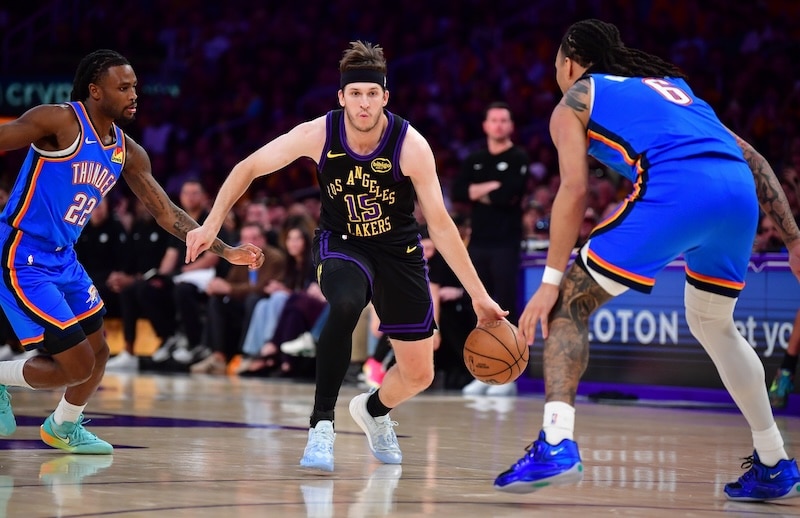
The Los Angeles Lakers have entered a new phase. LeBron James is gone after eight seasons, closing a run that delivered a 2020 title and constant contention. The exit was clean. The focus now shifts to a roster built with a single priority: to maximize Luka Dončić.
That shift has immediate implications for NBA Fantasy Rankings. Volume, usage, and role clarity drive value, and the Lakers now offer all three in a concentrated form. Rob Pelinka and head coach JJ Redick have streamlined the roster around Dončić’s strengths, with Austin Reaves now signed long term, and Walker Kessler, Collin Sexton, and Quentin Grimes filling defined roles.
Luka Dončić Drives Elite Fantasy Value
Dončić remains one of the safest high-end fantasy picks in any format. He averaged 33.5 points, 8.3 assists, and 7.7 rebounds last season, reestablishing himself as a top-tier producer after an uneven start following his move from Dallas. His usage rate sits among the league’s highest, and the Lakers have removed any ambiguity about who controls the offense.
The on-court fit has improved. A strong stretch in March showed how dangerous the Lakers can be when Dončić and Reaves, minus LeBron James, operate in sync. The offense flows through high pick-and-roll actions, with shooters spaced and a rim runner occupying help defenders. That structure boosts Dončić’s assist ceiling while keeping his scoring volume intact.
From a fantasy standpoint, the appeal is simple. He contributes across every category except blocks, rarely disappears in big games, and handles a workload that few players can match. With no secondary star competing for touches, his floor remains among the highest in the league.
Austin Reaves And Secondary Production
Reaves has emerged as the clear No. 2 option. He averaged 23.3 points, 4.7 rebounds, and 5.5 assists while shooting 49 percent from the field. That efficiency, paired with expanded ball-handling duties, gives him strong mid-round fantasy value with upside in points leagues.
His role is stable. Reaves operates as a secondary creator, often initiating offense when Dončić rests. That stagger keeps his usage consistent and protects his assist totals. He is not competing for alpha status, which actually helps his efficiency and decision-making.
Sexton and Grimes round out the perimeter rotation. Sexton brings scoring bursts and downhill pressure, though his fantasy value fluctuates with minutes and shooting variance. Grimes offers three-point shooting and perimeter defense, making him more valuable in category formats that reward efficiency and steals.
Frontcourt Impact With Walker Kessler
Walker Kessler anchors the interior. His value comes from rim protection, rebounding, and high-percentage finishing. He does not need touches, which fits cleanly next to Dončić’s ball dominance.
For fantasy managers, Kessler profiles as a specialist with a strong impact in blocks and field goal percentage. His rebounding numbers should remain steady, especially with the Lakers emphasizing defensive structure under Redick. The lack of offensive volume caps his scoring, but his efficiency offsets that limitation.
The broader roster construction reflects a deliberate shift. The Lakers are no longer balancing multiple high-usage stars. Instead, they have built a system in which role players amplify a single elite engine. That clarity often translates well to fantasy reliability.
Team Outlook And Fantasy Implications
The Lakers finished last season with flashes of high-level play but clear gaps. Injuries late in the year disrupted continuity, and the team relied heavily on Dončić to generate offense. A first-round win over Houston showed their ceiling, while a second-round exit against Oklahoma City exposed depth and defensive issues.
Those weaknesses still matter. Perimeter defense remains a concern, particularly at the point of attack. Reaves can be targeted, and the team lacks multiple elite stoppers on the wing. Kessler helps at the rim, but he cannot solve everything behind the arc.
For fantasy purposes, that context can actually help. Teams with defensive inconsistencies often play at faster paces or lean more heavily on their stars to outscore opponents. That dynamic can inflate counting stats for primary options like Dončić and Reaves.
Looking ahead, the Lakers project as a playoff team with a defined identity. They will go as far as Dončić can take them, and the roster is built to support that reality. For fantasy managers, that kind of clarity is valuable. Roles are stable, usage is predictable, and the hierarchy is set.