



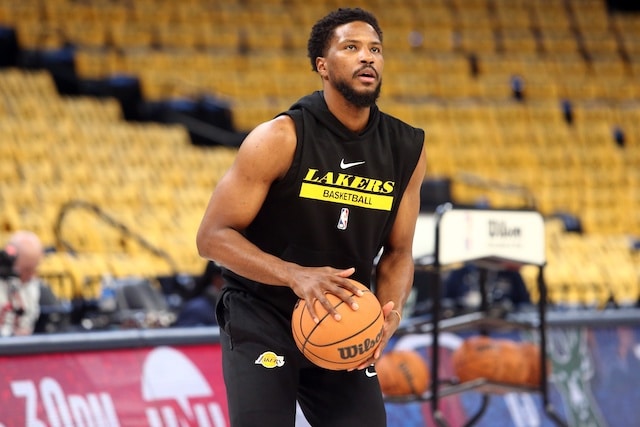
Malik Beasley’s federal gambling indictment has pushed the NBA back into a spotlight it hoped to avoid. The former Lakers guard now faces serious federal charges tied to an alleged scheme built around his individual stat lines and targeted prop bets.
For Lakers fans, this is not a distant league controversy. Beasley spent part of the 2022–23 season in Los Angeles and is now at the center of a federal case that goes to the heart of how modern fans consume games, with betting markets layered on every broadcast and highlight.
What The Indictment Alleges
Federal prosecutors unsealed the indictment on June 29, outlining an alleged conspiracy that centers on Beasley’s time with the Milwaukee Bucks in 2024. Authorities say Beasley agreed to alter his performance in several games while co‑conspirators placed prop bets built around his points, rebounds, and other stats, with the proceeds helping to address millions in gambling debt.
The counts include conspiracy to commit wire fraud, bribery in sporting contests, conspiracy to commit wire fraud involving honest services, and conspiracy to commit money laundering. Beasley has pleaded not guilty and was released on bond as the case moves forward. His lawyers have emphasized that he is entitled to the presumption of innocence, and any trial or potential plea agreement would still be months away.
The alleged scheme also involves former NBA big man Ed Davis, who prosecutors say helped organize wagers and passed along Beasley’s planned performance targets. Investigators allege that six people in total participated, using knowledge of how Beasley would play in specific games to place tens of thousands of dollars in bets on those outcomes.
An NBA Already Under Gambling Scrutiny
Beasley’s indictment arrives at a moment when the NBA is already reworking its approach to betting and integrity. The league banned former Toronto Raptors two‑way player Jontay Porter for life in 2024 after determining that he shared confidential health information, limited his own minutes, and wagered on NBA games, including a parlay built around him failing to meet modest stat projections.
That case forced the league to tighten its gambling policy language, ramp up player education, and lean harder on third‑party integrity services that scan betting data for unusual patterns. Teams, including the Lakers, now operate in a world where a role player’s sudden exit or an odd box score line can trigger questions that go far beyond coaching decisions or rotations.
Beasley most recently played for the Detroit Pistons and entered free agency with the federal investigation already in the background. Even before the indictment, front offices watched how the matter could affect any roster decision involving him. Around the league, executives are treating gambling exposure as another column on the risk sheet, alongside injury history and off‑court issues.
Where Legal Markets End And Illegal Schemes Begin
Sports betting has been legal in much of the United States since 2018, with more than 35 states and Washington, D.C. offering regulated wagering in some form. Odds appear on studio shows, NBA teams sign arena naming‑rights deals with operators, and the league sells official data feeds to licensed books. The distance between the product and the wager has narrowed to a thin line of rules, audits, and data monitoring.
Within that regulated system, licensed operators must log every bet, report suspicious activity, and work with integrity firms that build models to spot red flags. Those firms test lines, processes, and payout rates at licensed online casinos and sportsbooks for regulators, and they provide alerts when unusual prop action appears around a specific player or market. In recent high‑profile cases, data from regulated books helped trigger the investigations that led to league discipline and, eventually, federal charges.
The Beasley indictment describes conduct that, if proven, pushed beyond that regulated structure. Prosecutors are focused on what they call illegal gambling activity, meaning betting and related financial arrangements that sit outside licensed channels and hide from oversight. When that happens, the same tools that help catch suspicious prop betting in legal markets no longer apply, and investigators have to rely on wiretaps, financial records, and cooperating witnesses.
Can Sports And Gambling Really Be Pulled Apart?
History suggests that the answer has always been complicated. Point‑shaving scandals in college basketball and earlier eras of pro sports happened long before legal betting apps, often when wagering was formally banned in most of the country. Outlawing betting did not remove the incentive for players or associates facing debt or external pressure; it simply moved the activity into the shadows, reducing visibility.
Today’s NBA operates in an environment that is the opposite. Betting is legal and advertised, but the league is trying to foster a culture in which players and team personnel understand clear lines. The Porter decision and the Beasley case show how much of that effort now centers on single‑player props, where one individual can directly influence whether a bet wins or loses.
League officials have already publicly questioned whether certain low‑minute prop markets are worth the risk. Education around debt, problem gambling, and how to handle approaches from would‑be fixers has become a larger part of rookie orientations and team visits. Clubs are expected to discipline staff and players for sharing inside information, even if they never place a bet themselves.
Beasley’s case will move forward in federal court, with status conferences, motion hearings, and potential trial dates likely to stretch deep into the season. The NBA will conduct its own review on a separate track, which could take even longer. For fans, including those in Los Angeles who watched Beasley in purple and gold, the larger question is not whether sports and gambling can be separated. It is about how leagues manage a reality in which they are unavoidably linked, and whether their safeguards are strong enough to spot the next problem before it results in an indictment.