



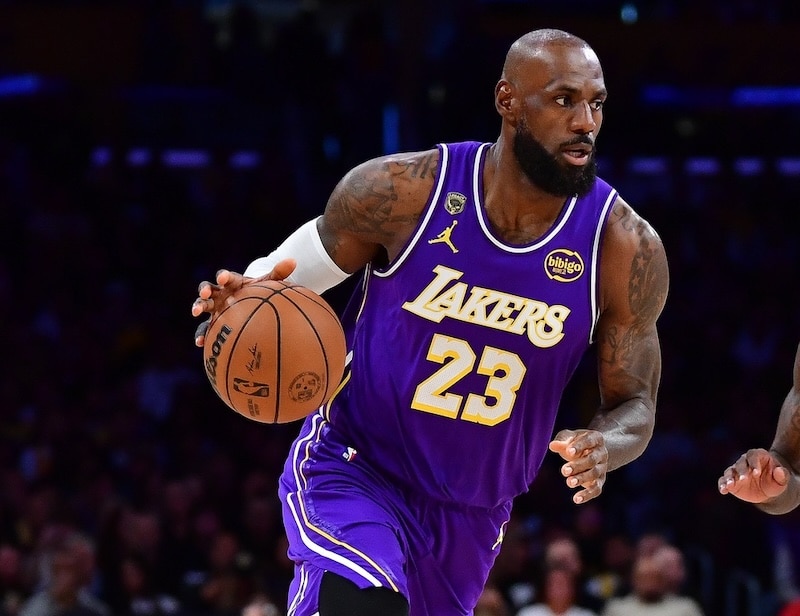
The Los Angeles Lakers enter the offseason with a clear mandate. They need more size, more defense, and more reliable playmaking if they want to stay in the Western Conference race in 2025–26.
Their margin for error is thin. Luka Dončić and LeBron James give the franchise a championship ceiling, but the rest of the roster still lags behind the true contenders. The front office has to move carefully to address key weaknesses while staying within tight roster and salary constraints.
Roster Context And Cap Reality
The Lakers’ offseason begins with big-picture questions about the core. LeBron James holds a player option reported in the mid–50 million range for 2025–26, and his decision will shape everything from the tax line to the team’s appetite for risk. Luka Dončić, acquired in a blockbuster deal before the 2025 trade deadline, is expected to be the long-term centerpiece, with extension eligibility projected to kick in this summer.
On the books, Los Angeles is tracking as a luxury tax team with a real chance of flirting with the second apron. That type of apron pressure limits how they can improve the roster. They will not operate with traditional cap space. Instead, they are expected to have only one meaningful exception to use and will lean heavily on trades built around expiring money and the few movable contracts they still control.
Rob Pelinka and the front office are believed to have one future first-round pick they can trade, plus multiple swap rights deep into the next decade. Those picks, combined with expiring deals, form the backbone of any major move. The front office has to decide whether to consolidate those assets for a single impact player or spread them across the roster to address multiple needs.
Search For A Starting-Caliber Center
The first priority is straightforward. The Lakers need a starting-caliber center who can hold up in a playoff series and complement Dončić and James on both ends. The team finished the 2024–25 season cycling through stopgap options, and that instability showed whenever opponents attacked the rim or spammed the pick-and-roll.
Ideally, Los Angeles finds a center who can anchor the paint, finish lobs, and survive on switches in space. Think vertical spacing, consistent rebounding, and enough mobility to stay on the floor in the fourth quarter. Recent reporting around the league has linked the Lakers to young bigs such as Walker Kessler and Jalen Duren as potential trade or offer-sheet targets, while names like Isaiah Hartenstein often surface as the type of player they need, even if the exact fit depends on price and availability.
Any deal for that level of center will likely require real assets. The Lakers can package one of their remaining first-rounders, plus a young player and salary filler, to try to pry loose a big man from a team that needs flexibility. The question is whether they are willing to burn that bullet now or wait for a bigger star opportunity down the line. With Dončić already in place, the pressure to maximize the current window suggests they will at least explore aggressive options.
Need For Two-Way Size On The Wing
The second glaring hole is on the wing. The Lakers have struggled to field enough big, physical perimeter defenders to handle the league’s wave of jumbo creators. When they run into teams with multiple six-foot-seven scorers, they often end up asking smaller guards or slower forwards to punch above their weight.
Recent speculation and reporting have repeatedly tied Los Angeles to defensive-minded wings. Names like Herb Jones and Trey Murphy III have been floated as dream fits, even as New Orleans is said to demand a steep price to move either player. Other reports over the past year have mentioned targets such as Derrick Jones Jr., Andrew Wiggins, and Ayo Dosunmu, reflecting a clear profile: long, switchable defenders who can hit catch-and-shoot threes.
The challenge is balancing cost and role. The Lakers cannot afford to overpay for a low-usage wing who clogs the offense or a shooter who defends only one position. They need players who can toggle between spots, guard primary ballhandlers at the point of attack, and still space the floor. JJ Redick’s system in his first full offseason as head coach will also emphasize versatility, as he continues to build out schemes that lean on switching, timely help, and high-spacing lineups around Dončić and James.
Fixing Bench Playmaking And Shooting
Beyond the front line and the wings, bench playmaking and shooting remain chronic issues. The 2024–25 Lakers often saw their offense crater whenever Dončić or James sat. Lineups without both stars struggled to generate clean looks, and teams loaded up on the few shooters Los Angeles trusted.
Austin Reaves is a key piece in solving that problem. His combination of secondary playmaking, pick-and-roll craft, and spot-up shooting gives the coaching staff flexibility. Still, the organization knows it needs at least one more guard or combo wing who can run offense against bench units, keep the ball moving, and knock down open shots. Gabe Vincent’s future may also be evaluated, as his contract could serve as a useful mid-tier matching salary if the right guard becomes available.
The Lakers will have limited tools to address this. The taxpayer or non-taxpayer midlevel exception, depending on exactly where they land relative to the aprons, could be used to target a veteran shooter or a combo guard who thrives in a smaller role. They can also scour the trade market for players who have fallen out of favor elsewhere. Even a modest upgrade off the bench could pay outsized dividends by preserving Dončić and James’ legs over 82 games and stabilizing non-star minutes in the playoffs.
Navigating Tight Assets And Timelines
All of this unfolds against the backdrop of a tight asset base and a ticking clock. LeBron James’ age and Dončić’s prime place pressure on the front office to act now. At the same time, the Lakers cannot ignore the long-term picture. The 2030s pick obligations and the looming 2027 free agent class mean every move has ripple effects.
The likely approach is a series of targeted, incremental moves. Use one mid-tier asset package to secure a starting center who aligns with Dončić and Reaves’ timelines. Find a defensive wing through a smaller trade or exception signing. Add a bench playmaker with a clean contract that does not hamstring future flexibility. If the right star becomes available later, the Lakers can then decide whether to pivot and repackage remaining assets.
The path is narrow, but the plan is clear. The Los Angeles Lakers have identified their needs. Now they have to thread the needle, add size and versatility, and build a functional rotation around two of the best offensive engines in the league.