



The Los Angeles Lakers made one move at the 2026 NBA trade deadline, sending Gabe Vincent and a 2032 second-round pick to the Atlanta Hawks in exchange for sharpshooter Luke Kennard. It was clear from the rumors circulating — as well as the lone deal that L.A. made — that general manager Rob Pelinka was prioritizing cap space in the summer of 2026.
The Lakers project to have around $48.5 million in cap space after renouncing the free agent rights of everyone except for Austin Reaves. That cap space was the impetus for their inaction in the summer of 2025 — their first offseason with Luka Doncic in the fold — and now their 2026 deadline approach.
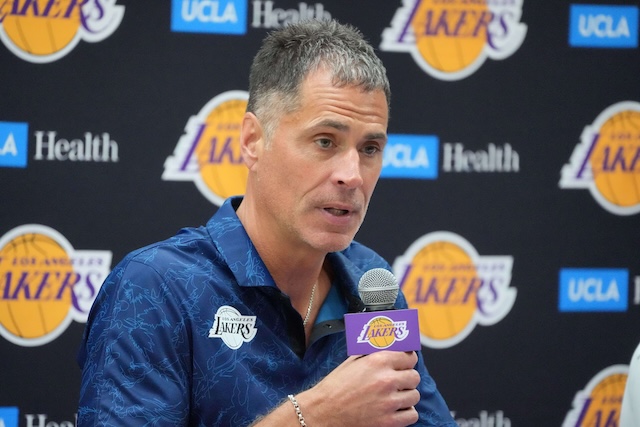
Pelinka, though, has a different definition of aggressive. He argued that the Lakers did their due diligence with regard to the trade market, and ultimately decided against some bigger deals in the name of aggression, via Dave McMenamin of ESPN:
“I would say we were aggressive. And one form of being aggressive is saying no to moves that come your way that might not be best for the short- and long-term future. That’s being aggressive, even though you end up doing nothing, because it’s hard to say no sometimes to getting a good player that could be a quick short-term fix, but could have implications for the long term where it doesn’t fit into the overall vision you have for the team.”
The Lakers decision-maker then lamented about how with the new CBA and salary cap rules, maintaining financial flexibility is more important than ever to build a championship roster, which is why that was his priority:
“I think it’s clear for all the teams in the league that this dual-apron system is harsh and strict, and some teams have dabbled over the second apron and realize it can be a real challenge. … Knowing that there’s an unintended consequence when a new system comes into place, teams kind of learn their way through it. We felt like creating optionality or having optionality now is really a positive thing for us this coming offseason. Because there’s some teams that maybe have gotten too deep into the aprons. And I think players, we see around the league, that become available when teams get in that position.
“So, whether it’s through free agency, whether it’s keeping our own players, whether it’s looking around the league for players that are really good that maybe teams are trying to get off salary, we feel like there’ll be so many different ways to complete our roster in the offseason.”
Cap space in the summer of 2026 has been the Lakers’ open plan for quite some time now, and it wasn’t surprising to see them stick to that with their movement at the trade deadline. In Pelinka’s mind, being aggressive now means, in part, the plan to be aggressive in the future.
It remains to be seen what that will actually look like in the summer. But by mid-July, it’s likely that all those questions are answered.
Lakers reportedly sign Kobe Bufkin to two-year deal
The Lakers agreed to terms on a two-year contract with guard Kobe Bufkin from the South Bay Lakers this week. He has a minimum contract for the remainder of this season, and a team option on 2026-27. Bufkin will likely get some significant minutes in the back half of this season, with the Lakers in need of point guard play after trading Gabe Vincent.
If you love our reporting, choose LakersNation.com as a preferred source on Google.