



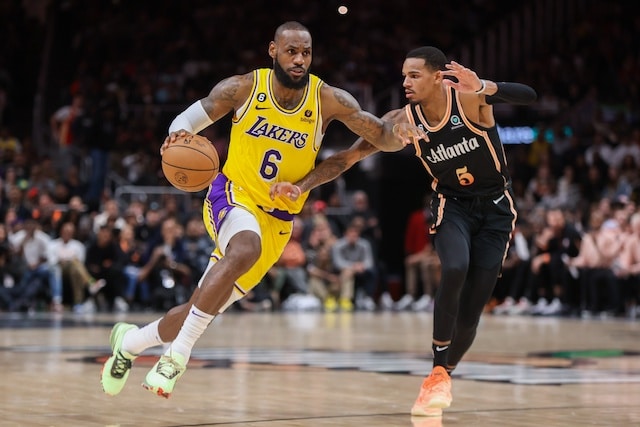
Only about 0.03% of high school basketball players will ever reach the NBA. Put another way, roughly 99.97% will not. With around 540,000 boys playing high school basketball in the U.S., that is a brutal reality check for athletes, parents, and fans who focus only on points per game, highlight reels, and recruiting buzz. Even the college numbers are far tighter than most people think: only 3.6% of high school players go on to play NCAA basketball at any level, and just 1.0% make it to Division I.
That is why academics are not a fallback plan. They are the plan. For families wondering whether to pay PaperWriter for research paper help, the bigger issue is the one this article examines: talent matters only if a player stays eligible long enough for that talent to count. The stat line that really shapes most basketball futures is not rebounds or assists. It is GPA, course selection, and academic consistency.
What It Takes to Stay on the Court: High School GPA Requirements
At the high school level, the first gate is usually simple but unforgiving: stay academically eligible or sit. In many states, the minimum threshold is a 2.0 GPA. In California, the CIF standard generally requires a 2.0 unweighted GPA and passing at least four classes. Texas is even stricter in practice because athletes must pass all classes tied to participation requirements. If a student falls below the standard, the result can be immediate: no games, and in some cases, no practice.
The consequences show up fast. A freshman guard in Los Angeles might start the season automatically eligible, but if his first-quarter GPA drops to 1.8, he can find himself benched before league play begins. A standout scorer in Texas, averaging 22 points per game, may still be ruled ineligible if he fails one required class. In other words, schools do not treat academics as optional maintenance. They treat them as a condition of participation.
The NCAA Gauntlet: Academic Standards That Decide College Futures
High school rules are only the beginning. For players with college ambitions, the NCAA Eligibility Center becomes the real checkpoint. Division I prospects must complete 16 NCAA-approved core courses, earn at least a 2.3 core GPA, and meet the famous 10/7 rule: by the start of senior year, they need 10 of the 16 core courses finished, with 7 of those in English, math, or science. Division II prospects also need 16 core courses, but the minimum core GPA is 2.2.
This is where many families misunderstand the system. A 3.5+ GPA does not automatically protect a student. Honors classes, AP classes, and strong semester averages may still leave a player ineligible if the school did not code courses correctly, if required classes were taken in the wrong sequence, or if deadlines were missed. Research conducted by PaperWriter shows that eligibility problems are often structural rather than motivational: students can work hard, earn good grades, and still miss out on opportunities because they misunderstood the rules.
That last mistake is costly. About 75% of student-athletes meet the NCAA academic minimums, meaning 25% do not. Another major barrier is institutional, not individual: about 27% of U.S. high schools are not fully cleared in the NCAA portal, which can limit access to a scholarship market worth billions. And even for eligible recruits, the odds stay narrow: only about 2% of high school athletes receive any athletic scholarship.
Staying Eligible in College Once You’re In
Making a roster is not the finish line. It is the next stage of compliance. NCAA Division I athletes generally must earn at least 6 credit hours per term and 24 credit hours per academic year to remain on track. They also face a GPA ladder: 1.8 after year one, 1.9 after year two, and 2.0 by year four. On top of that, they must complete 40% of their degree by the end of year two, 60% by the end of year three, and 80% by the end of year four.
These standards matter because, despite its profile, men’s basketball remains under constant academic pressure. The Division I Graduation Success Rate for men’s basketball stands at 87%, compared with 93% for women’s basketball and 91% across Division I overall. There has been real progress, including a rise in the graduation success rate for Black men’s basketball players from 46% to 84% since 2002. Still, the professional dream remains extremely selective: fewer than 2% of NCAA athletes go on to play professionally.
The Time Crunch Nobody Talks About
Academic eligibility is hard enough on paper. In real life, it is harder due to time constraints. High school athletes commonly spend 10 to 15 hours per week on sports during the season. At the college level, that jumps to roughly 32 hours per week. Add classes, homework, travel, study hall, training room appointments, and film review, and the total can reach about 60 hours a week between athletics and academics.
That workload affects performance. Around 80% of student-athletes report feeling overwhelmed at some point. One study summary found that 52.8% of their reported stress comes from academics, while 66.7% say their sport affects their ability to manage school responsibilities. Importantly, the biggest problem is not always academic difficulty itself. It is time management. A player may understand algebra, literature, or biology perfectly well, but still miss assignments because practice ends late, travel eats up evenings, and fatigue turns simple scheduling into a weekly crisis.
Every High School Basketball Star Needs a Game Plan
The smartest athletes treat academics the same way they treat shooting mechanics or strength work: as a system that requires repetition, feedback, and structure. That means mapping NCAA core courses early, checking school eligibility policies each quarter, and building support before grades slip. A sophomore wing with a 2.1 GPA is not far from losing access to games. A junior with a 3.4 GPA is not automatically safe if the wrong classes are on the transcript.
For some families, the search for support includes tutoring, mentoring, editing, or even questions about whether to pay for research paper assistance. The important distinction is that any help should function as academic support within the rules, not as a shortcut around them. The goal is not to replace the student’s work. The goal is to keep the student organized, informed, and academically durable enough to meet non-negotiable eligibility standards.
The Scoreboard That Matters Most
For every LeBron James story, there are hundreds of thousands of players whose futures will be decided by transcripts, not mixtapes. The GPA behind the game is not glamorous, but it is the statistic that determines who stays on the floor, who reaches college, and who keeps options open after basketball. Fans may remember dunks. Coaches may remember wins. But for most high school stars, the number that matters most is the one printed on the report card.