



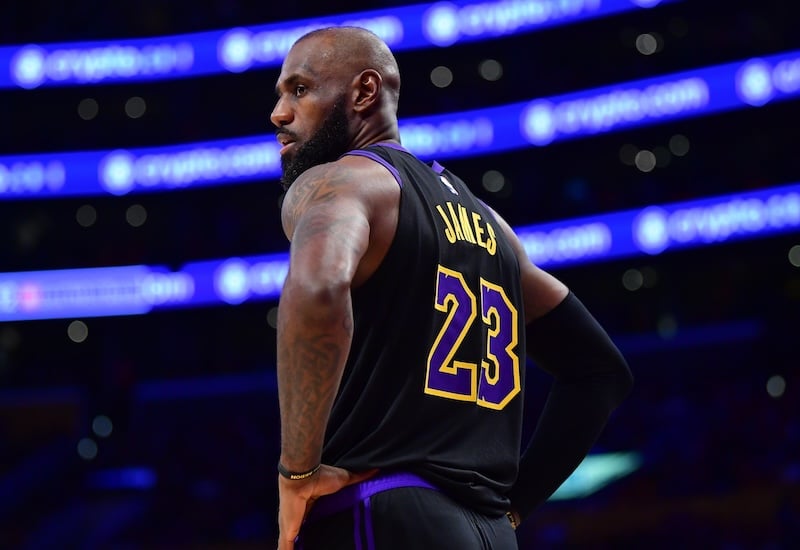
The Los Angeles Lakers’ 2026 playoff run ended the way it started: with questions about how much this group could realistically carry and how much longer LeBron James wants to keep doing this. The sweep at the hands of the Oklahoma City Thunder closed the book on a season that demanded everything from a 41‑year‑old James and still came up short.
Before the series started, Oddschecker had the Lakers as clear underdogs to advance past Oklahoma City, reflecting how steep the climb already looked against a deeper, younger Thunder team that had dominated the matchup all year. That number proved accurate. Los Angeles battled, adjusted, and kept buying into JJ Redick’s message, but never found enough shooting, size, or health to flip the script.
A Season Built On Resilience
This Lakers group spent the entire season operating on a thin margin. Luka Dončić and Austin Reaves were never fully healthy down the stretch, and Los Angeles leaned heavily on role players and the system to survive long stretches without its primary creators. Redick responded by tightening the rotation, emphasizing spacing and ball movement, and demanding defensive buy‑in from everyone on the floor.
The identity showed up in the first round against the Houston Rockets. The Lakers handled that series in six games, grinding out a closeout in Game 6 behind defense and halfcourt execution. It validated Redick’s belief that this roster could “maximize” itself even without a full deck and showed that the group understood exactly who it was.
Thunder Exposed the Ceiling
The Thunder series exposed how far that identity could really go. Oklahoma City’s length on the perimeter, depth at guard, and rim pressure put constant strain on the Lakers’ defense. Each time Los Angeles managed a run, the Thunder answered with pace, shooting, or a fresh body off the bench.
LeBron still created advantages, especially when he forced switches and attacked smaller defenders, but OKC rarely let him see single coverage without a second body hovering in the paint. With Dončić out and Reaves limited, the Lakers struggled to consistently punish those rotations. Missed threes, empty trips, and a few late‑game turnovers turned close contests into comfortable Thunder wins.
Game 4 captured it best. The Lakers fought to extend the series, pushed the tempo, and defended with urgency. Yet every small mistake turned into points against me. The final buzzer felt less like a collapse and more like the natural result of a series in which the better, deeper team controlled almost every margin.
JJ Redick’s Early Body Of Work
For Redick, this loss will sit next to an otherwise strong early résumé in Los Angeles. He has already delivered back‑to‑back 50‑plus‑win seasons, steadied a locker room that has seen constant roster churn, and built a system that keeps role players engaged and useful. Players have repeatedly praised his clarity, his preparation, and his willingness to hold stars and reserves to the same standard.
This season was supposed to be another step forward, not a coronation. The Rockets win, followed by a hard lesson against an emerging Thunder powerhouse, fits that arc. Redick pushed this roster close to its ceiling. Now the job shifts from squeezing the current group to helping reshape what the next version of the Lakers looks like.
LeBron’s Crossroads
That next version depends first on LeBron James. He enters the offseason out of contract, again talking publicly about needing time with his family before deciding whether to return for a 24th NBA season. His comments after the Thunder series were reflective but noncommittal. He acknowledged the grind, the sacrifices, and the reality that he has nothing left to prove.
At the same time, James has hinted all season that he still enjoys the work. He has spoken about wanting to leave the game on his own terms, about his competitive fire, and about how much he values meaningful basketball in April and May. If there is a reason for him to stay, it will be the belief that this franchise still offers a path to contention and that his voice still matters in shaping that path.
The possibility that this was his final playoff run in purple and gold, or his last postseason at all, hangs over everything. If he retires, the franchise shifts overnight into the post‑LeBron era. If he decides to return, his next decision will be whether to sign on again with the Lakers or explore one more move, whether for family, legacy, or a final title swing.
What This Means For The Lakers’ Future
From the Lakers’ side, the calculus is complicated. While indicating that they want James to return, the front office must balance immediate competitiveness with building something sustainable beyond LeBron’s timeline. They already saw, in this series, what happens when the roster cannot support an aging superstar against an elite, younger opponent. Depth, shooting, and another primary creator are no longer luxury items. They are requirements.
Redick’s system gives them a starting point. His staff has shown they can develop role players, incorporate new pieces quickly, and maintain a defined identity even as personnel changes. If James returns, the Lakers will sell him on an aggressive plan to reload around him. If he walks away or joins another team, Redick becomes the face of a broader reset that builds around whoever steps into the void.
For now, the image that lingers is a familiar one: LeBron James walking off the floor, head up, applauding the fans, while questions about his future echo across Los Angeles. This loss to the Thunder did not just end a season; it ended a season. It might have closed the final chapter of one of the most significant eras in Lakers history, or it might become the turning point that pushed both James and the franchise into one last, urgent push together.
Either way, the 2026 playoffs will be remembered not only for how they ended, but for what they forced everyone involved to confront about the future.