



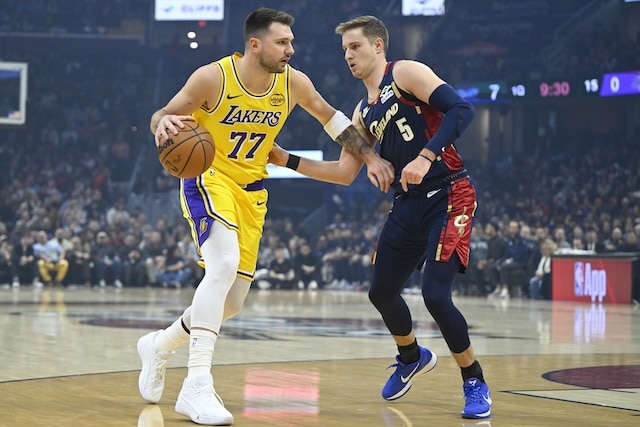
For most of the past two decades, conversations around the Los Angeles Lakers have centered on stars, scoring, and offensive upside. In 2025–26, that framing no longer matches reality. The Lakers are putting up top-tier offensive numbers, but their defense has slipped into the bottom five and now shapes every discussion about their ceiling.
NFL betting sites are inundated with Super Bowl bets, but the NBA action remains strong, particularly bets on the Los Angeles Lakers, and the data behind those wagers tells a clear story: this is a team that looks like a contender on one side of the ball and a lottery team on the other. Through late January, the Lakers sit in the mid-pack of the Western Conference despite boasting one of the league’s most efficient offenses. Their defensive profile is the anchor pulling everything down.
The Numbers Behind The Defensive Slide
The decline is easy to see in the metrics. The Lakers own one of the league’s worst defensive ratings this season, hovering in the mid-117s and ranking in the mid-20s to high-20s league-wide depending on the day’s results and sample filters. That puts them firmly in the bottom tier of NBA defenses.
Team efficiency sites and matchup data show why. Opponents are scoring in the mid-110s per game against the Lakers and shooting comfortably above league average from beyond the arc. Los Angeles is near the bottom of the league in opponent three-point percentage allowed and in the lower tier in opponent two-point percentage as well, signaling trouble both at the rim and on the perimeter.
Rebounding adds to the problem. The Lakers are roughly break-even on the glass overall, but that can be misleading. They give up costly offensive rebounds in key moments, especially when they lean into smaller, offense-first lineups. Against bigger, more physical frontcourts, second-chance points often swing close games.
Offense Is Good Enough — Defense Is Not
The frustrating part for the Lakers is that their offense is performing at a level that usually correlates with contention. Their offensive rating sits firmly in the top 10 and, at times, has been in the top six. They score around 117–118 points per 100 possessions and push into the high teens in raw scoring per game.
Luka Dončić remains the offensive engine, piling up elite scoring and playmaking numbers. LeBron James continues to score efficiently and facilitate at a high level, even in his late 30s. When one or both are on the floor, the Lakers rarely struggle to generate good looks, draw fouls, or create mismatches.
Yet the team’s overall net rating is close to zero and has dipped into negative territory at various points. That gap between a top-tier offense and a middling or negative net rating almost always points to defensive issues. For the Lakers, it means many of their big scoring nights are offset by equally big nights from opponents.
Lineups That Bleed Points
On-off and pairing data underline the structural issues. The LeBron–Luka minutes, which should be the team’s trump card, have produced a negative net rating across a large sample. Their combined offensive rating is elite — well into the 110s and approaching 120 in some breakdowns — but the corresponding defensive rating sits at or above 121, which is bottom-of-the-league level.
The film and numbers tell the same story. In star-heavy lineups without a true rim protector or multiple plus defenders on the wing, opponents hunt mismatches relentlessly. Guards drag Luka and other weaker defenders into action, forcing late rotations. Bigs are pulled away from the basket, opening up drives and corner threes.
When the Lakers lean into spacing and skill with lineups featuring Dončić, James, Austin Reaves, or Rui Hachimura, and a finesse big, the defense collapses. Defensive ratings for those groups consistently exceed 120. Even when the offense hums, the math breaks against them because they cannot get stops.
Injuries And Thin Defensive Personnel
Injuries have made everything worse. Jarred Vanderbilt, one of the few true defensive specialists on the roster, has missed stretches of time. When he is unavailable or on a minutes limit, the Lakers lose their best point-of-attack defender and a versatile forward who can credibly guard multiple positions.
Gabe Vincent, another guard expected to provide some defensive resistance, has also had availability issues. Without those options, the Lakers’ perimeter defense often consists of offensive-minded guards and wings who struggle to keep quick ball-handlers in front of them. That puts constant pressure on the back line.
The lack of a second, reliable rim protector behind Anthony Davis–type size — or in this construction, behind the main bigs — further exposes the scheme. Smaller frontcourts struggle with verticality, and teams with strong slashing guards or roll-heavy bigs repeatedly punish the Lakers at the rim and on lobs.
Who Punishes The Lakers Most
Certain opponent profiles have emerged as particularly problematic. High-pace teams with aggressive guards and multiple shooters, like Oklahoma City or Minnesota, have repeatedly stressed the Lakers’ defense. They drag bigs into space, attack gaps, and spray the ball to three-point shooters when help comes late.
Even more methodical offenses have found success by targeting switches. Opponents isolate Luka or other weaker defenders, drive into the paint, and force rotations that break the structure. Once the Lakers start scrambling, any missed rotation or miscommunication leads to open catch-and-shoot looks.
When opponents push in transition, the problems compound. The Lakers’ floor balance is inconsistent, especially after live-ball turnovers or long misses. Their wings do not always get matched up early, and rim protection is often out of position. Easy runouts and early-clock threes inflate opponent efficiency.
Historical Context And Why Defense Matters More
Recent NBA history is blunt: teams outside the top 15 in defensive rating almost never win the title. The Lakers’ own 2020 championship run leaned heavily on size, physicality, and a top-tier defense that could dictate tempo and force teams into difficult shots.
That context makes the current profile alarming. A top-six offense paired with a bottom-five defense is not a contender’s statistical footprint. It is the mark of a team with a high entertainment value and a low margin for error, especially in a playoff setting where scouting and game-planning amplify weaknesses.
Chasing more scoring would miss the core problem. The offense is already good enough to win big in May and June. The question is whether the Lakers can get enough stops to survive cold shooting nights and grind out low-possession games against other elite teams.
The Path Forward: Identity Over Headline Moves
The good news for the Lakers is that they do not need a total reset. They need clarity. Prioritizing defense in rotation choices, trade targets, and scheme design would move the needle more than marginal offensive tweaks.
That means more minutes for players who defend, even if they are lower-usage offensive options. It means staggering LeBron and Luka in ways that surround each with better defensive support, instead of leaning too heavily on their shared minutes. It also means building in non-negotiable defensive rules: stronger point-of-attack pressure, more disciplined closeouts, and cleaner communication on switches.
Scheme adjustments can help as well. The Lakers could reduce automatic switching, keep certain matchups more static, and emphasize nail help to protect the paint. They can accept a few tougher shots against contests rather than surrendering layups and wide-open threes.
The Lever That Still Moves Their Ceiling
The 2025–26 Lakers are not broken as a roster. They are misaligned in emphasis. Their stars still produce at an elite level, and their offense has the profile of a team that should sit near the top of the West.
What holds them back is a defense that ranks among the league’s worst by both traditional and advanced measures. Until that changes, every win will feel harder than it needs to be, and every playoff projection will come with a defensive caveat.
In today’s NBA, star power drives relevance, but defense still decides who plays in June. For the Lakers, the path from “dangerous” to “legitimate contender” runs straight through their weakest end of the floor.